
The Debate Over Big Bubbles vs Small Bubbles in Pizza Crusts
The debate over pizza crust bubbles – big or small – comes up in almost every serious pizza conversation.
When it comes to big bubbles vs small bubbles in pizza crust, opinions run strong. Which one signals a better result? And more importantly, do pizza crust bubbles actually matter for the operators serving pizza every day in a busy commercial kitchen?
Here’s what the science says, what your customers notice and what it means for how you handle your bases.
What Causes Pizza Crust Bubbles?
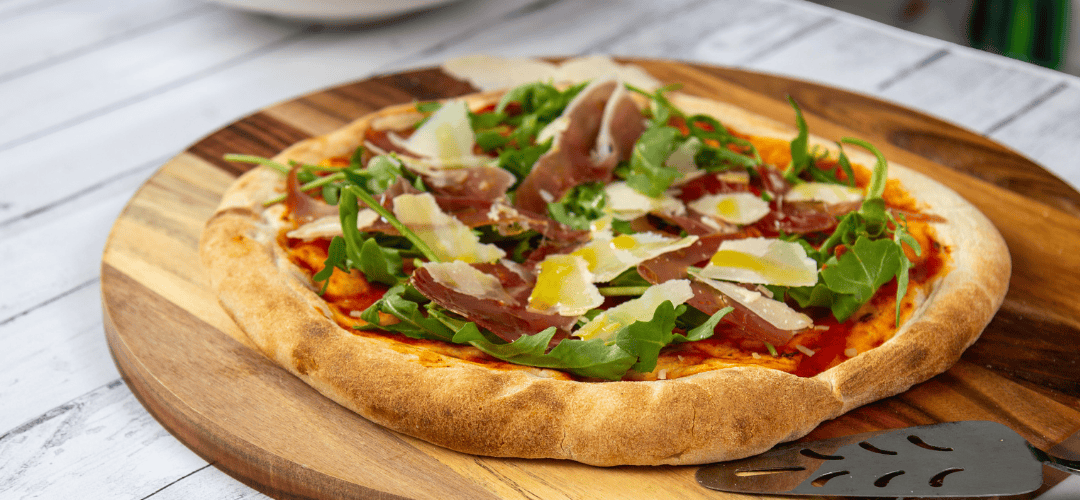
Big bubbles – sometimes called leopard spotting – are the result of high-temperature fermentation and high-heat baking. When dough is cooked at high temperatures, the yeast activity creates larger pockets of air that expand rapidly in the oven. The result is a crust with dramatic charring, an open crumb structure and a crispy exterior.
This is the hallmark of Neapolitan-style pizza cooked in a woodfired oven at 400 degrees Celsius or above. The leopard spotting signals proper fermentation and high heat — two things pizza purists watch for.
What Causes Small Bubbles?
Small bubbles – sometimes called a blistered crust – develop when dough ferments at cooler temperatures over a longer period. The slower fermentation produces smaller, more even air pockets throughout the dough. When baked at moderate temperatures, the result is a crust that’s more uniform, softer in texture and easier to chew.
This style works well in deck ovens and conveyor ovens running at lower temperatures and suits a wider range of topping styles and service formats.
What Does This Mean for Your Kitchen?
The size of the bubbles in your crust is directly influenced by two things – your dough and your oven. Neither one alone determines the result.
A high-quality sourdough base in a low-temperature oven will not produce leopard spotting no matter how good the product is. Equally, a par-baked base designed for deck oven use will not perform optimally at woodfired temperatures.
This is one of the most common points of confusion for operators setting up or reviewing their pizza offering. The expectation of a certain crust style needs to match the oven environment and the product being used – otherwise the result will always fall short of what was intended.
What Do Customers Actually Notice?
Most diners don’t use the language of big bubbles or small bubbles – but they absolutely notice the difference in eating experience. A crust with good bubble structure has a lighter, more interesting texture. It has contrast – crispy where it should be crispy, chewy where it should be chewy. A flat, dense crust without much bubble structure tends to feel heavy and forgettable.
For operators, the practical takeaway is this: your crust texture is a signal to the customer about the quality and care that went into the pizza. Getting it right builds repeat business. Getting it wrong quietly costs you customers who don’t complain — they just don’t come back.
The Buvetti Approach
Buvetti products are designed to perform within the oven environment they’re matched to. Our Italian sourdough bases are slow fermented to develop proper bubble structure before they reach your kitchen — so the foundation is already there. What happens in your oven is what determines the final result.
If you’re unsure which Buvetti product suits your oven setup, France is happy to discuss it – even if you’re not a current customer. Reach out at buvetti.com.au.